
Blog/Blog Details
Why Can't Ireland Build Houses Fast Enough?
Why Can't Ireland Build Houses Fast Enough?
Understanding the Real Barriers Behind Ireland's Housing Crisis
Part of the Lavan Construction & Infrastructure Insight Series
Executive Summary
Ireland's housing crisis is one of the defining economic and social challenges of the past decade. Despite record levels of Government funding, planning reforms, new housing initiatives and significant private sector investment, the pace of housing delivery continues to fall short of demand.
The issue is often portrayed as a shortage of builders or a lack of planning permissions. In reality, the challenge is considerably more complex. Housing delivery depends upon an entire ecosystem working efficiently—from planning authorities and utility providers to transport infrastructure, construction materials, skilled labour and finance.
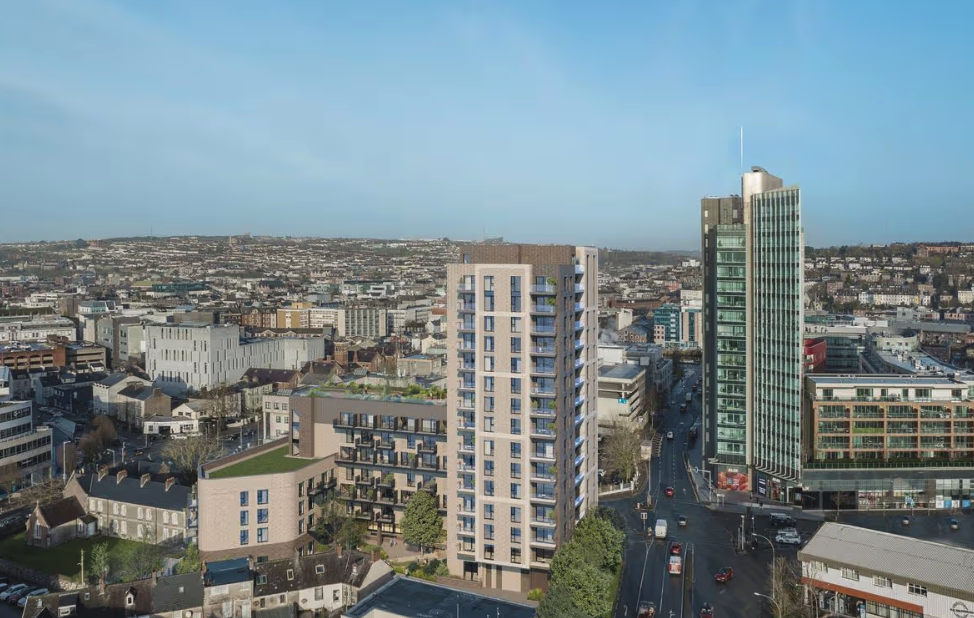
For counties such as Cork, where population growth, inward investment and economic expansion continue at pace, these challenges are particularly acute. Delivering new homes is no longer simply about constructing houses; it is about building complete communities supported by roads, water services, schools, healthcare facilities and resilient infrastructure.
This article examines the principal factors slowing housing delivery in Ireland, with a particular focus on Cork, and explores why solving the housing crisis requires investment across the entire construction supply chain.
Housing Demand Continues to Outpace Supply
Ireland has experienced sustained population growth over the past decade. Alongside natural population increases, inward migration, economic expansion and changing household sizes have significantly increased demand for housing.
Smaller average household sizes mean that more homes are required even if population growth were to stabilise. At the same time, Ireland continues to experience strong employment growth, attracting skilled workers who also require accommodation.
Successive Governments have introduced ambitious housing strategies with the objective of substantially increasing annual housing completions. While output has improved compared with previous years, demand continues to exceed supply in many regions, particularly Dublin, Cork, Galway and Limerick.
The result has been:
rising house prices;
increasing rental costs;
reduced affordability for first-time buyers;
pressure on emergency accommodation;
delayed household formation among younger generations.
Housing is no longer simply a property issue; it is increasingly recognised as an economic competitiveness issue.
Cork: One of Ireland's Fastest-Growing Regions
Few parts of Ireland illustrate these pressures more clearly than Cork.
Cork is expected to accommodate significant population growth over the coming decades under the National Planning Framework. Major investment continues across pharmaceuticals, life sciences, technology, logistics, food production and advanced manufacturing.
Projects including the continued redevelopment of Cork Docklands, transport improvements, industrial expansion and educational investment reinforce Cork's position as Ireland's second city.
However, economic growth creates additional housing demand.
Every new employer requires workers.
Every new worker requires accommodation.
Every new community requires infrastructure.
Without sufficient housing delivery, businesses face increasing difficulty recruiting staff, commuting distances increase and affordability deteriorates.
Planning Is Only One Part of the Story
Planning frequently receives the greatest public attention.
While planning delays undoubtedly affect some developments, planning permission alone does not deliver houses.
After planning approval has been granted, developers must still secure:
finance;
utility connections;
road access;
environmental compliance;
contractor availability;
construction materials;
skilled labour;
regulatory approvals.
Any delay within these stages can postpone construction.
The housing delivery process therefore resembles a chain.
Its overall strength depends upon its weakest link.
Infrastructure Comes Before Homes
Every new housing development requires supporting infrastructure.
Residents expect:
safe roads;
footpaths;
public transport;
drainage;
water supply;
wastewater treatment;
electricity;
broadband;
schools;
healthcare facilities.
These services often require years of planning and investment before a single house can be occupied.
For example, wastewater treatment capacity remains a significant constraint in parts of Ireland. Even where planning permission exists, insufficient network capacity can delay development until upgrades are completed.
Similarly, road improvements frequently need to precede housing construction to ensure safe access and minimise congestion.
Infrastructure is therefore not an optional extra—it is the foundation upon which housing depends.
The Construction Supply Chain Matters
When discussing housing shortages, relatively little attention is given to the construction supply chain.
Every home requires:
foundations;
drainage;
concrete;
stone;
sand;
aggregates;
asphalt;
reinforcement;
transport;
machinery.
These materials originate from highly regulated industries operating long before a building reaches roof level.
Aggregates, in particular, form the basis of almost every construction project.
They are used beneath roads, footpaths, foundations, utilities, drainage systems and concrete products.
Without a reliable supply of quality aggregates, housing delivery inevitably slows.
Unlike many manufactured products, aggregates cannot economically be transported over extremely long distances due to haulage costs and environmental impacts.
This makes regional quarry capacity strategically important for sustainable housing delivery.
Labour Remains a Significant Challenge
The Irish construction sector continues to experience skills shortages across numerous trades.
Demand exists for:
plant operators;
engineers;
electricians;
carpenters;
bricklayers;
groundworkers;
surveyors;
project managers.
As infrastructure investment increases alongside private housing development, competition for skilled labour intensifies.
Training new workers requires time.
Retaining experienced workers requires certainty of future workloads.
Increasing productivity through modern equipment, digital technologies and improved project management will therefore remain essential.
Rising Costs Continue to Influence Delivery
Construction costs have increased substantially during recent years.
Factors include:
energy prices;
transport costs;
labour costs;
inflation;
financing costs;
global supply chain disruption.
Higher costs inevitably influence project viability.
Developers must carefully balance construction costs against achievable selling prices or rental income.
Where viability becomes marginal, projects may be delayed despite planning permission already being in place.
Cost certainty throughout the supply chain has therefore become increasingly valuable.
Why Local Supply Chains Matter
One lesson repeatedly reinforced during recent global disruption has been the value of resilient local supply chains.
Locally sourced construction materials can offer:
shorter transport distances;
improved delivery reliability;
reduced carbon emissions;
faster response times;
stronger relationships between suppliers and contractors.
For a growing region such as Cork, maintaining dependable local construction suppliers contributes to both economic resilience and project certainty.
Reliable access to aggregates, concrete materials and other essential products allows contractors to programme work with greater confidence.
Looking Ahead
There is no single solution to Ireland's housing crisis.
Increasing housing supply will require coordinated progress across multiple areas simultaneously.
These include:
planning reform;
infrastructure investment;
utility upgrades;
workforce development;
construction innovation;
financing;
efficient supply chains;
continued investment in regional construction capacity.
Ireland has demonstrated that it possesses the expertise and ambition to deliver major infrastructure projects.
Applying the same coordinated approach across housing delivery offers the greatest opportunity to increase supply while maintaining high construction standards.
Lavan Insight
Housing does not begin when the first block is laid.
It begins much earlier—with planning, infrastructure, engineering, transport and the responsible production of the materials that make construction possible.
Every road entering a housing estate, every drainage system beneath a development and every foundation supporting a family home relies upon carefully specified construction materials.
As Cork continues to grow, delivering high-quality homes will depend not only on architects and builders but also on the strength, resilience and professionalism of the entire construction supply chain.
A sustainable housing future requires every link in that chain to perform reliably.
References
This article draws upon publicly available information from the Department of Housing, Local Government and Heritage; the National Planning Framework; the Central Statistics Office (CSO); the Housing Commission; the Construction Industry Federation (CIF); Cork City Council; Cork County Council; Uisce Éireann; Transport Infrastructure Ireland (TII); and recent Government housing and infrastructure publications.